

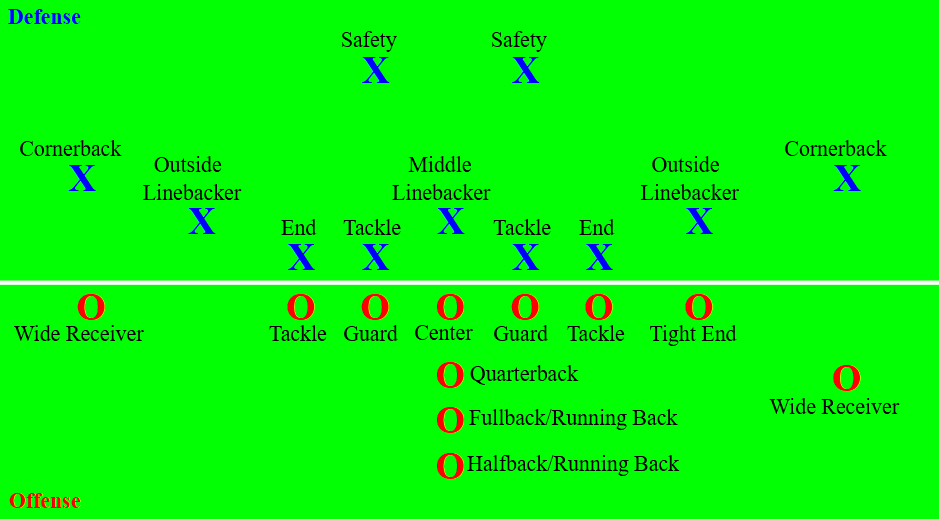
American football is a fast-moving team sport built around strategy, physical strength and carefully timed decisions. At first glance, a match can look like a series of short collisions and sudden sprints, but there is a clear structure behind every play. Each american football player has a defined responsibility, and the way those roles fit together often determines the result. Understanding the basics also makes it easier to follow discussions about sport, teams and even unrelated entertainment topics such as crusado casino, without losing sight of the details that make the game distinctive.
How American Football Works
The main objective in american football is straightforward: move the ball into the opponent’s end zone to score a touchdown. Teams take turns attacking and defending, with 11 players from each side on the field at a time in standard outdoor play.
A game is divided into four quarters. In the NFL, each quarter lasts 15 minutes, although the actual event takes considerably longer because the clock stops for certain situations, including incomplete passes, players going out of bounds and timeouts. A match also includes a halftime break.
The basic structure of a play
The attacking team, known as the offence, begins each play at the line of scrimmage. The centre snaps the ball to the quarterback, who then decides how the play should develop. The ball may be handed to a running back, thrown to a receiver or carried by the quarterback himself.
The defence tries to stop the attack before it reaches the required distance. A typical possession is organised around four attempts, called downs, to gain at least 10 yards.
For example, if a team starts at its own 25-yard line, it has four downs to advance the ball to at least the 35-yard line. Gaining eight yards on the first play leaves the offence with second down and two yards to go. If it then gains three yards, it earns a new set of four downs.
If the offence fails to gain the necessary distance, possession usually changes. Teams sometimes use their fourth down to punt the ball away, sending it further downfield to make the opponent’s starting position less favourable.
American Football Positions: Who Does What?
The different american football positions are divided into three main groups: offence, defence and special teams. Each group has a separate purpose, although all three contribute to the overall result.
Offensive Positions
The offence is responsible for advancing the ball and scoring points. Its players need a combination of speed, coordination, strength and tactical awareness.
Quarterback (QB)
The quarterback is usually the central decision-maker in an offensive play. After receiving the snap, the quarterback can throw a pass, hand the ball to another player or run with it.
A successful quarterback must read the defence quickly. If defenders move towards the line of scrimmage, a pass may be the better option. If they spread out to cover receivers, a running play could create more space.
Quarterbacks also communicate adjustments before the snap. These instructions help the offence respond to the defensive formation.
Running Back (RB)
Running backs are primarily responsible for carrying the ball. They receive handoffs from the quarterback and try to find gaps between the defensive players.
Their work is not limited to running. A running back may also catch short passes or block an approaching defender to protect the quarterback. Some players are particularly effective in open space, while others are known for pushing through contact and gaining a few difficult yards.
Wide Receiver (WR)
Wide receivers are among the fastest players on the field. Their main task is to catch passes from the quarterback, often after running a carefully planned route.
A route might involve moving straight downfield, cutting sharply towards the sideline or changing direction across the middle. The receiver must create enough separation from the defender to give the quarterback a clear target.
For example, on a long passing play, a receiver may sprint deep into the opponent’s half while the quarterback looks for an opening. On a shorter play, a quick route can help the team gain a few yards and keep the drive moving.
Tight End (TE)
The tight end combines responsibilities usually associated with receivers and offensive linemen. Depending on the formation, this player may block defenders near the line or move into space to catch a pass.
That flexibility makes the position particularly useful. A defence may struggle to predict whether the tight end will help protect the quarterback or become a receiving option.
Offensive Line
The offensive line consists of the centre, two guards and two tackles. These players do not usually carry or catch the ball. Their job is to create space for running plays and protect the quarterback during passing attempts.
The centre also starts each play by snapping the ball. If the offensive line fails to hold its position, the quarterback may be tackled before having time to make a decision.
Defensive Positions
The defence aims to stop the opponent from gaining yards or scoring. Its players must react to the offensive formation and recognise whether a play is likely to involve a run or a pass.
Defensive Line
Defensive tackles and defensive ends operate close to the line of scrimmage. Their main responsibilities are to disrupt running plays, pressure the quarterback and prevent the offensive line from controlling the area.
A defensive end may try to move around the outside of an offensive tackle, while a defensive tackle often attempts to push through the middle.
Linebackers
Linebackers play behind the defensive line and have a varied role. They can tackle running backs, cover receivers and rush the quarterback.
Their position gives them a useful view of the developing play. A linebacker must often make a quick decision based on the movement of the quarterback and the offensive backfield.
Cornerbacks and Safeties
Cornerbacks usually cover wide receivers and attempt to prevent successful passes. They need speed, balance and the ability to follow sudden changes of direction.
Safeties generally operate deeper in the defensive formation. They provide support against long passes and can move forward to help stop running plays. Together, cornerbacks and safeties form the secondary, the last major defensive line before the end zone.
Special Teams: The Players Behind Kicks and Returns
Special teams enter the game during kickoffs, punts, field-goal attempts and extra-point attempts. These situations may look like brief interruptions between offensive and defensive plays, but they can have a major influence on the final score.
Kicker and Punter
The kicker is responsible for field goals and kickoffs. A field goal is worth three points and is usually attempted when the offence cannot reach the end zone but is close enough for a realistic kick.
The punter has a different task. When a team decides not to risk another offensive play on fourth down, the punter kicks the ball downfield. The aim is to make the opposing team start its possession as far from the end zone as possible.
Return Specialists
Return specialists catch kickoffs and punts and attempt to advance the ball towards the opponent’s end zone. A good return can give the offence a much better starting position. These players need acceleration, balance and the ability to recognise gaps between defenders.
Key American Football Rules Every Fan Should Know
Although the sport involves plenty of contact, it is not simply a contest of strength. The rules determine when players can make contact, how possession changes and which actions result in penalties.
Scoring: Touchdowns, Field Goals and Safeties
There are several ways to score in american football:
- Touchdown – 6 points: awarded when a player carries the ball into the opponent’s end zone or catches it there while meeting the rules for a completed pass.
- Extra point – 1 point: usually attempted as a kick after a touchdown.
- Two-point conversion – 2 points: an alternative attempt in which the offence tries to reach the end zone again from a short distance.
- Field goal – 3 points: awarded when the ball is kicked through the opponent’s goalposts during a field-goal attempt.
- Safety – 2 points: scored when the attacking team is tackled or commits certain violations in its own end zone.
A practical example shows how quickly the score can change. A team that scores a touchdown and successfully kicks the extra point earns seven points in total. If it chooses a two-point conversion and succeeds, the same touchdown is worth eight.
Common Penalties
Penalties are given when players break the rules. Some of the most common include:
- Holding: illegally grabbing or restricting an opponent, usually resulting in a 10-yard penalty for the offence.
- False start: an offensive player makes an illegal movement before the snap, typically costing the team five yards.
- Offside: a defensive player is in an illegal position when the ball is snapped, usually resulting in a five-yard penalty.
- Pass interference: illegally preventing an opponent from attempting to catch a pass. The consequences depend on whether the offence or defence committed it.
- Roughing the passer: making prohibited contact with the quarterback after the ball has been released.
Not every penalty leads to the same outcome. Some result in a loss of yards, while others give the opposing team an automatic first down. The referee announces the violation and signals the direction in which the penalty will be enforced.
How Offensive and Defensive Roles Work Together
The most interesting part of american football is often the relationship between individual positions. A play rarely succeeds because of one player’s effort alone. It depends on timing, communication and the ability to react to the opponent.
Consider a typical passing play. The centre snaps the ball, and the offensive line forms protection around the quarterback. Meanwhile, wide receivers run their routes, while the tight end may block or move into a receiving position. The quarterback studies the defence and chooses the safest available option.
The defence responds at the same time. Defensive linemen try to break through the protection, linebackers watch for a run or short pass, and defensive backs cover the receivers. If the quarterback holds the ball for too long, a defender may reach him and record a sack.
Running plays follow a different pattern. Offensive linemen open a gap, the running back receives the handoff and attempts to move through it. Linebackers and defensive linemen try to close that space before the runner can gain significant yardage.
This is why understanding positions makes a match easier to follow. Even when the ball is moving quickly, the actions of players away from it often determine whether a play succeeds.
What Makes a Good American Football Player?
Physical ability is important, but it is only one part of the job. A successful american football player needs to understand formations, recognise patterns and make decisions under pressure. The exact combination of skills depends on the position.
A quarterback needs accuracy and awareness. A wide receiver relies on speed, coordination and reliable catching. Offensive linemen require strength, balance and precise technique, while defensive backs need quick reactions and the ability to anticipate passes.
Teamwork is equally important. A receiver can run an excellent route, but the play may still fail if the quarterback does not have enough protection. A running back may find an opening, but the offensive line must create it first. Even a technically strong defence can struggle if players do not communicate and maintain their assignments.
Conclusion
American football is built around clearly defined roles, a structured system of downs and a range of scoring opportunities. The quarterback directs the offence, running backs and receivers advance the ball, and the offensive line creates the conditions for successful plays. On the other side, defensive linemen, linebackers and defensive backs work together to stop that progress.
Special teams add another layer through kicks, punts and returns. Once the main american football positions and basic rules become familiar, the game is much easier to understand. What may initially look like a collection of short, chaotic plays reveals itself as a carefully organised contest in which every position has a purpose.
